Cartilage Restoration
in Lucknow
Damaged cartilage does not heal on its own. Once it wears away, the bones underneath start rubbing against each other, causing pain, swelling, and stiffness. If left untreated, it can lead to early arthritis and permanent joint damage.
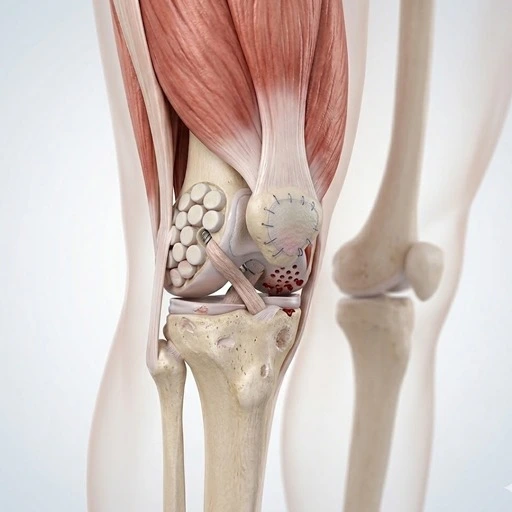
What Is Cartilage and Why Does It Matter?
Cartilage is the smooth, rubbery tissue that covers the ends of your bones inside a joint. It works like a cushion — absorbing shock and allowing smooth, pain-free movement.
Cartilage can get damaged due to:
Sports Injuries
Sports injuries or sudden falls
Overuse
Overuse or heavy physical work
Aging
Aging and wear-and-tear
Previous Injury
Previous knee or joint injury
Alignment
Poor alignment of the leg (bow-legs or knock-knees)
The most common joint affected is the knee, but cartilage damage can also happen in the hip, shoulder, and ankle.
Signs That You May Have Cartilage Damage
These symptoms often indicate cartilage wear or injury in the joint.
- ✓ Pain deep inside the joint, especially when walking or climbing stairs
- ✓ Swelling that does not go away
- ✓ A clicking, grinding, or locking feeling in the joint
- ✓ Joint stiffness after sitting for a long time
- ✓ Weakness or giving-way of the knee
- ✓ Pain that gets worse over weeks or months
What Is Cartilage Restoration Surgery?
Cartilage restoration surgery is a set of procedures designed to repair or regrow damaged cartilage in a joint. The goal is to relieve pain, improve movement, and protect the joint from further damage.
Unlike joint replacement surgery, which removes the damaged joint entirely, cartilage restoration tries to save the natural joint. This makes it especially suitable for younger and more active patients.
Cartilage Restoration Procedures Offered by Dr. Kamal Kishor Gupta
Dr. Kamal Kishor Gupta performs a full range of cartilage restoration treatments at his clinic in Lucknow. The right procedure depends on the size of the damage, your age, and your activity level.
Microfracture Surgery
This is one of the simplest and most widely used techniques. Small holes are made in the bone beneath the damaged cartilage to release bone marrow cells, which then grow to form new cartilage-like tissue.
• Done arthroscopically (keyhole surgery)
• Short hospital stay
• Best for small cartilage defects in younger patients
Autologous Chondrocyte Implantation (ACI)
In this two-stage procedure, healthy cartilage cells are taken from the patient's own joint, grown in a laboratory, and then implanted back into the damaged area to grow new cartilage.
• Uses the patient's own cells — no risk of rejection
• Suitable for larger cartilage defects
• Good long-term results in active adults under 50
Osteochondral Autograft Transfer (OATS / Mosaicplasty)
Healthy bone-and-cartilage plugs are taken from a non-weight-bearing area of the same joint and placed into the damaged area. This fills the defect with live cartilage that integrates naturally.
• Single surgery, no laboratory step
• Works well for medium-sized defects
• Faster recovery compared to ACI
Osteochondral Allograft Transplantation
When the damaged area is too large for OATS, donor cartilage from a tissue bank is used. This is a fresh graft that is shaped to match the patient's joint exactly.
• Ideal for large or complex cartilage damage
• No need to harvest from the patient's own joint
• Proven results for bone and cartilage loss together
PRP and Regenerative Injections
Platelet-Rich Plasma (PRP) injections use the patient's own blood, processed to concentrate healing proteins, and injected into the joint to reduce inflammation and support cartilage repair.
• Non-surgical, done as an outpatient procedure
• Used alone or combined with surgery
• Good option for early-stage cartilage wear
How Cartilage Restoration Surgery Is Done — Step by Step
Here is what happens on the day of your surgery:
Step 1: Anaesthesia
You will be given either general anaesthesia (fully asleep) or spinal anaesthesia (lower body numb). Dr. Gupta will decide which is safer for you based on your health.
Step 2: Arthroscopy (Keyhole Entry)
In most procedures, Dr. Gupta makes 2–3 small cuts around the joint and inserts a tiny camera. This allows him to see the full extent of the damage before deciding the best repair method.
Step 3: Cartilage Repair or Transplant
Depending on the size and type of damage, the procedure (microfracture, OATS, ACI, or allograft) is performed with precision tools inside the joint.
Step 4: Closing and Dressing
The small cuts are closed with sutures or clips and covered with a sterile dressing. The whole procedure usually takes 1 to 2 hours.
Step 5: Recovery Room
You are moved to a recovery area for a few hours where the team monitors your vitals and pain levels.
Recovery After Cartilage Restoration Surgery
Recovery time varies depending on which procedure was done, but here is a general guide:
| Time After Surgery | What You Can Expect |
|---|---|
|
First 1–2 weeks
|
Rest, ice, and elevation. Crutches may be needed. Pain is managed with medication. |
|
Weeks 3–6
|
Gentle physiotherapy begins. Range of motion exercises to prevent stiffness. |
|
Months 2–4
|
Strengthening exercises. Most patients can walk normally without pain. |
|
Months 4–6
|
Return to light activity, cycling, and swimming. |
|
6–12 months
|
Full return to sports or heavy activity for most patients. |
Why Choose Dr. Kamal Kishor Gupta for Cartilage Restoration in Lucknow?
Dr. Kamal Kishor Gupta is a highly experienced orthopaedic doctor based in Lucknow. He specialises in joint preservation surgery and has helped hundreds of patients avoid joint replacement through early and accurate cartilage treatment.
Expert in Arthroscopic Cartilage Surgery
Expert in arthroscopic (keyhole) cartilage surgery
Latest Cartilage Procedures
Uses the latest techniques including ACI, OATS, and PRP therapy
Individual Treatment Plan
Personalised treatment plan based on your age, damage, and goals
Physiotherapy Support
Dedicated physiotherapy support for full recovery
Cost Discussion Before Surgery
Transparent cost discussion before surgery
Modern Operation Theatre in Lucknow
Conveniently located clinic in Lucknow with modern operation theatre
Who Is a Good Candidate for Cartilage Restoration?
You may be a good candidate if you:
Age and Cartilage Damage
Are under 55 years of age with cartilage damage
Focal Cartilage Defect
Have a specific focal cartilage defect (not whole-joint arthritis)
Persistent Joint Pain
Have been in pain for months without improvement from rest or medicines
Active Lifestyle
Are active and want to return to sports or physical work
Previous Treatments Not Effective
Have not responded well to physiotherapy or steroid injections
Consultation and MRI Review
Dr. Kamal Kishor Gupta will conduct a thorough examination, including MRI scan review, before recommending any procedure.
Book An Online Appointment
Our team will contact you shortly to schedule an appointment at your convenience.
Frequently Asked Questions (FAQs)
What happens after surgery?
Most patients are back to normal life within 3 months. Here is exactly what to expect, day by day.
Day 1 – 2
Surgery done — rest and monitor
You wake up in the ward. Pain is managed with medicines. Most patients can stand with support on Day 1 itself.
Day 3 – 7
First steps with support
You start walking with a walker. Physiotherapy begins. Most patients go home by Day 4 or 5.
Week 2 – 4
Walking improves daily
You can climb stairs slowly. Swelling reduces. You stop using the walker and switch to a stick.
Month 2 – 3
Back to normal activities
You can walk freely, cook, drive, and do light work. Most patients feel 80% better by this stage.
Month 6+
Full recovery
Complete recovery. You can live a normal, pain-free life. Many patients say they wish they had done it sooner.
Every patient recovers differently. Dr. Gupta personally monitors your recovery at every stage. You are never alone in this journey.
Book a Consultation or Send Your MRI
Apollomedics Super Speciality Hospital, Lucknow
Kanpur–Lucknow Road, Sector B, Bargawan,
LDA Colony,
Lucknow, Uttar Pradesh 226012
