Shoulder Instability & Rotator
Cuff Surgery in Lucknow
Shoulder instability and rotator cuff problems can cause pain, weakness, and difficulty in lifting or moving the arm. At Apollomedics Super Speciality Hospital, Lucknow, Dr. Kamal Kishor Gupta provides advanced diagnosis and surgical treatment for shoulder injuries using modern techniques focused on faster recovery and improved shoulder movement.
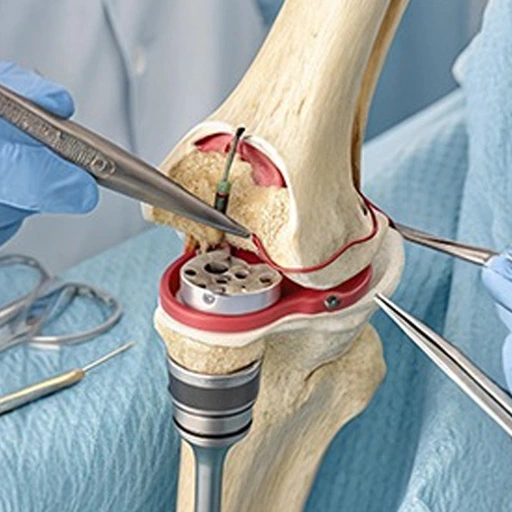
What Is Rotator Cuff Surgery?
The rotator cuff is a group of four muscles and their tendons that wrap around the shoulder joint. Together they keep the head of your upper arm bone (humerus) firmly seated in the shoulder socket — and they power almost every movement your arm makes, from lifting a cup of tea to throwing a cricket ball.
When one or more of these tendons tears — through injury, overuse, or age-related wear — pain, weakness, and loss of motion follow. Rotator cuff surgery restores the torn tendon back to the bone, relieving pain and rebuilding shoulder strength.
Dr. Kamal Kishor Gupta performs all rotator cuff procedures arthroscopically at Apollomedics Super Speciality Hospital, Lucknow — using small keyhole incisions, a camera, and tiny instruments. This means less pain, faster healing, and a lower risk of complications compared to open surgery.
Shoulder Conditions Dr. Gupta Treats
Dr. Kamal Kishor Gupta provides complete care for the full range of shoulder instability and rotator cuff problems:
Rotator Cuff Tears
• Partial-thickness tears — tendon is damaged but not fully severed
• Full-thickness (complete) tears — tendon is fully torn from the bone
• Massive rotator cuff tears — multiple tendons involved
• Chronic tears — longstanding tears with muscle wasting
Shoulder Instability
• Shoulder dislocation (first-time and recurrent)
• Bankart lesion — tear of the labrum at the front of the socket
• Hill-Sachs lesion — dent in the humeral head from repeated dislocation
• Multidirectional instability — shoulder loose in more than one direction
Other Shoulder Conditions
• SLAP tear — tear of the labrum at the top of the shoulder socket
• AC joint injury — damage to the joint where the collarbone meets the shoulder blade
• Shoulder impingement syndrome — rotator cuff tendons catching under the bone
• Calcific tendinitis — calcium deposits in the rotator cuff tendons
• Biceps tendon problems — partial or full biceps tendon tear at the shoulder
Surgical Procedures Performed
Every surgery is arthroscopic (keyhole) wherever possible — meaning no large cuts, no overnight ICU, and faster recovery.
| Procedure | What It Involves |
|---|---|
|
Rotator Cuff Repair
|
Torn tendon is re-attached to the bone using small anchor screws. Done arthroscopically through 3–4 tiny holes. |
|
Bankart Repair
|
Torn labrum is stitched back to the socket rim to stop the shoulder from dislocating again. |
|
Remplissage
|
Combined with Bankart repair for large Hill-Sachs lesions — fills the dent in the bone to prevent re-dislocation. |
|
SLAP Tear Repair
|
Torn labrum at the top of the socket is reattached or trimmed depending on the type of tear. |
|
Subacromial Decompression
|
Bone spur under the shoulder blade is shaved away to give the rotator cuff more room to move. |
|
AC Joint Reconstruction
|
Damaged joint between the collarbone and shoulder blade is stabilised using a graft or synthetic ligament. |
|
Biceps Tenodesis / Tenotomy
|
Damaged biceps tendon at the shoulder is either re-anchored lower on the arm or released to remove pain. |
When Is Surgery Needed?
Dr. Kamal Kishor Gupta always reviews all non-surgical options first. Surgery is recommended only when:
The tear is large (full-thickness or massive) and will not heal on its own
Pain and weakness continue despite 3–6 months of physiotherapy and injections
The shoulder keeps dislocating despite rehabilitation
A young or active patient needs full strength back — for work or sport
The tear is getting bigger on follow-up MRI scans
Share your shoulder MRI on WhatsApp directly with Dr. Gupta. He reviews every scan personally and gives you a plain-language answer within 24–48 hours — at no charge. Thousands of patients from Delhi, Kanpur, and across North India use this service every year.
Non-Surgical Options Dr. Gupta Offers First
For many rotator cuff and instability problems, surgery is not the first answer. Dr. Gupta explores these options before recommending an operation:
PRP (Platelet-Rich Plasma) Therapy
Your own blood is processed to concentrate healing proteins, then injected into the tendon. Promotes natural tissue repair.
GFC (Growth Factor Concentrate) Injections
A more advanced form of PRP with a higher concentration of growth factors — effective for partial tears and early tendon degeneration.
-
✓
Physiotherapy Programme
A structured shoulder rehabilitation plan — strengthening the surrounding muscles to offload the damaged tendon and restore movement. -
✓
Corticosteroid Injection
A targeted anti-inflammatory injection to reduce pain and swelling quickly — allows physiotherapy to begin sooner.
If you are looking for the best Orthopedic Doctor in Lucknow, Dr. Kamal Kishor Gupta at Apollomedics is a name trusted by patients across North India.
How Arthroscopic Rotator Cuff Surgery Works — Step by Step
Dr. Gupta performs all shoulder arthroscopy at Apollomedics Super Speciality Hospital. Here is what to expect from your surgical journey:
01 — Pre-Operative Assessment
Full shoulder examination, X-ray, and MRI review. Blood tests and anaesthesia assessment. Your surgery and recovery plan are explained in full.
02 — Anaesthesia & Positioning
Surgery is performed under general anaesthesia combined with a nerve block (interscalene block) so you wake up with minimal pain. You are positioned in the beach-chair position for the best access.
03 — Arthroscopic Entry
Three to four small incisions (each less than 1 cm) are made around the shoulder. A tiny camera (arthroscope) is inserted to view the joint on a screen.
04 — Repair & Reconstruction
Torn tendons are re-attached using small titanium anchor screws placed in the bone. Torn labrum or SLAP tears are repaired with suture anchors. Bone spurs are smoothed away if present.
05 — Closure & Dressing
Incisions are closed with fine stitches or steristrips. Your arm is placed in a sling. You rest in the recovery area for 1–2 hours before going home.
06 — Physiotherapy & Return to Activity
A phase-wise rehabilitation programme begins the next day. Most patients return to desk work in 4–6 weeks and full activity in 4–6 months depending on the size of the repair.
Recovery Timeline
Recovery after rotator cuff surgery is gradual. Here is a general guide — your exact timeline depends on the size of the tear and the type of repair:
| Timeframe | What Happens |
|---|---|
|
Day 1–2
|
Discharged home with arm in sling. Ice and pain medication as needed. Gentle pendulum exercises begin. |
|
Week 2–6
|
Sling worn continuously. Passive movement exercises with physiotherapist. Wound check at 2 weeks. |
|
Week 6–12
|
Sling removed. Active movement begins. Light activities return. Strengthening programme starts. |
|
Month 3–6
|
Progressive strengthening. Return to driving, desk work, light sport. Full function improving steadily. |
|
Month 6+
|
Full return to sport and heavy manual work. Most patients report complete pain relief and restored strength. |
Why Choose Dr. Kamal Kishor Gupta for Shoulder Surgery?
If you are looking for a shoulder surgeon in North India, here is why patients from Delhi, Kanpur, Varanasi, and across Uttar Pradesh choose Dr. Kamal Kishor Gupta at Apollomedics Lucknow:
3 International Fellowships
FIAA – Singapore General Hospital (Arthroscopy & Arthroplasty), MRCS – Royal College of Surgeons Edinburgh, FIFA Medical Diploma – Barcelona. Fewer than 1% of orthopaedic surgeons in India hold all three.
Fully Arthroscopic Approach
All shoulder surgeries are performed as keyhole procedures wherever possible. Smaller cuts, less blood loss, less pain, and faster return to daily life.
Genuine Non-Surgical First Policy
Dr. Gupta does not recommend surgery unless it is genuinely needed. PRP, GFC, and physiotherapy are always explored first.
Free MRI Review on WhatsApp
Send your scan from anywhere in India. Dr. Gupta reviews it personally and replies in 24–48 hours — before you need to travel.
Apollomedics Super Speciality Hospital
One of North India's most advanced hospitals — with dedicated orthopaedic OT, digital imaging, rapid recovery ward, and full physiotherapy unit.
4.9 Stars on Google — 580+ Reviews
Consistent patient feedback across Google, Justdial, and Lybrate. Patients regularly cite clear communication, honest advice, and smooth surgery.
International-Level Shoulder Surgery Expertise
Patients from Delhi, Kanpur, Varanasi, and across Uttar Pradesh trust Dr. Kamal Kishor Gupta for advanced arthroscopic shoulder care, honest guidance, and structured recovery support at Apollomedics Lucknow.
If you are looking for the best Orthopedic Doctor in Lucknow, Dr. Kamal Kishor Gupta at Apollomedics is a name trusted by patients across North India.
Book An Online Appointment
Our team will contact you shortly to schedule an appointment at your convenience.
Frequently Asked Questions — Rotator Cuff Surgery in Lucknow
What happens after surgery?
Most patients are back to normal life within 3 months. Here is exactly what to expect, day by day.
Day 1 – 2
Surgery done — rest and monitor
You wake up in the ward. Pain is managed with medicines. Most patients can stand with support on Day 1 itself.
Day 3 – 7
First steps with support
You start walking with a walker. Physiotherapy begins. Most patients go home by Day 4 or 5.
Week 2 – 4
Walking improves daily
You can climb stairs slowly. Swelling reduces. You stop using the walker and switch to a stick.
Month 2 – 3
Back to normal activities
You can walk freely, cook, drive, and do light work. Most patients feel 80% better by this stage.
Month 6+
Full recovery
Complete recovery. You can live a normal, pain-free life. Many patients say they wish they had done it sooner.
Every patient recovers differently. Dr. Gupta personally monitors your recovery at every stage. You are never alone in this journey.
Book a Consultation or Send Your MRI
Apollomedics Super Speciality Hospital, Lucknow
Kanpur–Lucknow Road, Sector B, Bargawan,
LDA Colony,
Lucknow, Uttar Pradesh 226012
