Meniscus Surgery
in Lucknow
A torn meniscus is one of the most common knee injuries — and one of the most misunderstood. Many patients are told to simply rest or have a piece of the meniscus removed. But removing meniscus tissue means losing the natural cushion of your knee permanently. A better option, when possible, is to repair and save it.
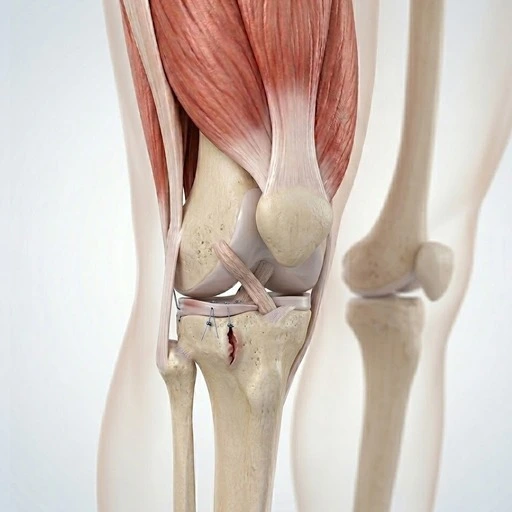
What Is the Meniscus and Why Is It Important?
Your knee has two menisci — one on the inner side (medial) and one on the outer side (lateral). Each is a C-shaped piece of tough, rubbery cartilage that sits between the thigh bone (femur) and shin bone (tibia).
The Meniscus Performs Three Critical Functions
Shock Absorption
It cushions every step you take, protecting the bones from impact
Stability
It keeps the knee joint in proper alignment during movement
Load Distribution
It spreads your body weight evenly across the joint surface
When the meniscus is torn and removed (even partially), the knee loses this protection. Over time, the cartilage wears away, arthritis sets in, and joint replacement becomes more likely.
This is why Dr. Gupta's first goal is always to repair and save the meniscus — not remove it.
How Does the Meniscus Get Torn?
Meniscus tears are very common and can happen to anyone.
- ✓ A sudden twist or pivot of the knee during sports — cricket, football, badminton, running
- ✓ A heavy squat or lifting motion that puts excessive load on the knee
- ✓ A direct impact or fall onto the knee
- ✓ Gradual degeneration in older adults — the meniscus weakens over time and tears with minimal force
- ✓ Untreated previous knee injury that has put extra stress on the meniscus
Signs That Your Meniscus May Be Torn
You may have a meniscus tear if you experience:
Knee Pain
Pain along the inner or outer side of the knee, especially when bending or squatting
Swelling
Swelling that appears within a day or two of the injury
Clicking or Locking
A clicking, popping, or locking sensation — the knee feels like it is catching or getting stuck
Movement Difficulty
Difficulty fully straightening or bending the knee
Knee Giving Way
Knee giving way during walking or climbing stairs
Recurring Pain
Pain that comes and goes but keeps returning after activity
Who Is a Candidate for Meniscus Repair Surgery?
Not every meniscus tear needs surgery. And not every tear that needs surgery needs repair. Dr. Gupta carefully assesses your MRI and clinical condition before making any recommendation.
Meniscus Repair
Physically Active
You are under 50 years of age and physically active
Outer One-Third Tear
the tear is in the outer one-third of the meniscus — the area with blood supply that allows healing
Clean Complete Tear
the tear is a clean, complete tear rather than a complex degenerative one
Why Repair Matters
Fresh Injury
you have had the injury recently — fresh tears respond better to repair
Active Lifestyle
you want to remain active — sports, physical work, or an active lifestyle
Protect The Knee
you want to protect your knee long-term and delay or avoid arthritis
Treatment Is Recommended Only When Needed
Dr. Gupta will always explore non-surgical management first — rest, physiotherapy, and injections. Surgery is recommended only when it is genuinely needed and beneficial for you.
Meniscus Repair vs. Meniscus Trimming — What Is the Difference?
Understanding the difference between these two procedures is important before making any decision:
| Category | Meniscus Repair | Partial Meniscectomy (Trimming) |
|---|---|---|
|
Goal
|
Save and heal the torn meniscus | Remove the torn piece of meniscus |
|
Long-term impact
|
Protects knee from arthritis | Increases arthritis risk over time |
|
Recovery
|
Longer — 4 to 6 months | Faster — 6 to 8 weeks |
|
Best for
|
Young, active patients with repairable tears | Older patients or complex tears that cannot heal |
|
Future joint health
|
Better — meniscus still in place | Higher risk of cartilage loss over years |
Dr. Gupta's Preference
Dr. Gupta's preference is always to repair and save the meniscus wherever possible. Removing meniscus tissue is an irreversible decision — he makes it only when repair is not biologically feasible.
The Meniscus Repair Procedure — Step by Step
Dr. Gupta performs meniscus repair arthroscopically using a tiny camera (arthroscope) and specialised instruments inserted through small cuts around the knee.
Step 1: Pre-Surgery Evaluation
Before the operation, Dr. Gupta reviews your MRI scan in detail — checking the type of tear, its location, size, and whether the tissue is healthy enough to repair. He also reviews your blood reports and overall fitness. Patients with conditions like diabetes or heart disease are carefully prepared with the full medical team before surgery.
Step 2: Anaesthesia
Most patients receive spinal anaesthesia — you are awake but feel nothing below the waist. This is safer than general anaesthesia and speeds up recovery. A nerve block is also given so you feel very little pain after the procedure.
Step 3: Arthroscopy — Seeing Inside the Knee
Dr. Gupta makes 2–3 small cuts around the knee and inserts a tiny camera (arthroscope). This gives him a precise, magnified view of the torn meniscus and the entire inside of the joint. Arthroscopy means no large incision, less pain, and faster healing.
Step 4: Meniscus Repair with Sutures
Using thin, specialised instruments passed through the small cuts, Dr. Gupta stitches the torn edges of the meniscus back together. Several repair techniques may be used — inside-out, outside-in, or all-inside — depending on where the tear is located. The goal is to bring the torn tissue into contact so it can heal naturally over the coming months.
Step 5: Closing and Pain Management
The small incisions are closed carefully. Dr. Gupta uses a multimodal pain protocol — nerve blocks combined with local anaesthetic injections around the joint — so most patients experience very little pain after surgery and do not require strong opioid painkillers.
Recovery After Meniscus Repair — What to Expect
Meniscus repair recovery takes longer than simple trimming — because the goal is to allow the repaired tissue to heal fully. Rushing recovery risks re-tearing the repair. Dr. Gupta's team provides a structured, phase-wise recovery plan for every patient.
| Time After Surgery | What to Expect |
|---|---|
|
Day 1–2
|
Short hospital stay. Pain managed well. Gentle range of motion exercises begin immediately to prevent stiffness. |
|
Week 1–2
|
Discharged home with crutches and clear instructions. No weight on the repaired knee initially. Physiotherapy begins. |
|
Week 3–6
|
Partial weight bearing begins. Swelling reduces. Strengthening exercises for the muscles around the knee. |
|
Month 2–3
|
Full weight bearing. Most patients walking normally without support. Stairs managed comfortably. |
|
Month 3–4
|
Return to light activity — cycling, swimming, and walking outdoors. |
|
Month 4–6
|
Return to sport and high-activity life for most patients. Final review to confirm complete healing. |
Case Example
“A 26-year-old cricket player from Lucknow had a complete medial meniscus tear diagnosed after a bowling injury. Dr. Gupta performed an all-inside arthroscopic repair. The patient was walking without support at 8 weeks and returned to competitive cricket at 5 months — with no re-tear on follow-up MRI at 12 months.”
Non-Surgical Options — Dr. Gupta Explores Every Option First
Not every meniscus tear needs surgery. Before recommending any procedure, Dr. Gupta considers:
Structured Physiotherapy
targeted strengthening of the muscles around the knee to reduce load on the meniscus and allow smaller tears to settle
PRP Therapy (Platelet-Rich Plasma)
regenerative injections from your own blood to reduce inflammation and support tissue healing
GFC Therapy (Growth Factor Concentrate)
an advanced regenerative injection that promotes healing in early and moderate meniscus injuries
Activity Modification and Load Management
reducing high-impact activities while the knee settles
Bracing
a knee brace to support the joint and reduce stress on the meniscus during healing
Surgery is recommended only when non-surgical treatment has not worked, or when the type and location of the tear means it will not heal without surgical repair.
Why Choose Dr. Kamal Kishor Gupta for Meniscus Surgery in Lucknow?
Dr. Kamal Kishor Gupta is one of the most qualified arthroscopic knee surgeons in North India. His international training sets him apart from most orthopaedic surgeons in Uttar Pradesh:
FIAA — Singapore General Hospital
Fellowship in Arthroplasty and Arthroscopy from one of Asia's top joint surgery centres
MRCS — Royal College of Surgeons, Edinburgh
a globally recognised UK surgical qualification held by fewer than 1% of orthopaedic surgeons in India
FIFA Medical Diploma — Barcelona
the gold standard in sports medicine and joint care, the same qualification held by doctors who treat professional football athletes worldwide
Why Patients Choose Dr. Gupta
- ✓ He takes time to explain your MRI findings and all options — in plain language, not medical jargon
- ✓ He does not rush to surgery and always tries non-surgical options first
- ✓ He prioritises meniscus repair over removal — protecting your knee for the long term
- ✓ He is available for a free MRI review on WhatsApp — even before you travel to Lucknow
- ✓ His patients consistently report fast recovery and excellent return to sports
- ✓ 580+ Google reviews with a 4.9-star average
If you are looking for the best Orthopedic Doctor in Lucknow , Dr. Kamal Kishor Gupta at Apollomedics is a name trusted by patients across North India.
Risks and Complications — What You Should Know
Meniscus repair is a safe, well-established arthroscopic procedure. However, like any surgery, there are risks. Dr. Gupta discusses these with every patient before the operation.
Repair Failure
the meniscus does not heal and a re-tear occurs (more likely in older patients or poor-quality tissue)
Infection
rare, minimised by strict OT protocols at Apollomedics
Stiffness
prevented by starting physiotherapy from day one
Blood Clot (DVT)
prevented with blood thinners and early movement
Nerve Irritation Around the Incision Sites
usually temporary
Low Complication Rates with International-Level Expertise
Dr. Gupta's complication rate is well below national averages — a result of his precise arthroscopic technique, international training, and the advanced facilities at Apollomedics Super Speciality Hospital, Lucknow.
Book An Online Appointment
Our team will contact you shortly to schedule an appointment at your convenience.
Frequently Asked Questions — Meniscus Repair in Lucknow
What happens after surgery?
Most patients are back to normal life within 3 months. Here is exactly what to expect, day by day.
Day 1 – 2
Surgery done — rest and monitor
You wake up in the ward. Pain is managed with medicines. Most patients can stand with support on Day 1 itself.
Day 3 – 7
First steps with support
You start walking with a walker. Physiotherapy begins. Most patients go home by Day 4 or 5.
Week 2 – 4
Walking improves daily
You can climb stairs slowly. Swelling reduces. You stop using the walker and switch to a stick.
Month 2 – 3
Back to normal activities
You can walk freely, cook, drive, and do light work. Most patients feel 80% better by this stage.
Month 6+
Full recovery
Complete recovery. You can live a normal, pain-free life. Many patients say they wish they had done it sooner.
Every patient recovers differently. Dr. Gupta personally monitors your recovery at every stage. You are never alone in this journey.
Book a Consultation or Send Your MRI
Apollomedics Super Speciality Hospital, Lucknow
Kanpur–Lucknow Road, Sector B, Bargawan,
LDA Colony,
Lucknow, Uttar Pradesh 226012
