Total Knee Replacement
Surgery in Lucknow
If your knee pain is not getting better with medicine, injections, or physiotherapy — and it is stopping you from walking, climbing stairs, or doing daily work — you may need a Total Knee Replacement.
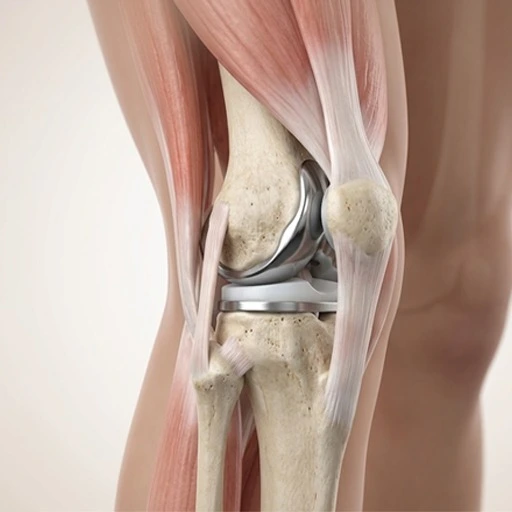
What Is Total Knee Replacement Surgery?
Total Knee Replacement (TKR) — also called Total Knee Arthroplasty — is a surgery where the damaged parts of your knee joint are removed and replaced with artificial parts made of metal and medical-grade plastic.
Your Knee Joint Has Three Main Bones
Femur
Thigh Bone
Tibia
Shin Bone
Patella
Kneecap
In severe arthritis or injury, the cartilage between these bones wears away. Bone rubs on bone — causing constant pain, swelling, stiffness, and difficulty walking.
During a Total Knee Replacement, Dr. Gupta removes the damaged bone surfaces and places specially designed implants:
How The Knee Is Replaced
Modern implants help restore smooth and pain-free movement.
- ✓ Metal cap placed on the femur
- ✓ Metal tray fixed on the tibia
- ✓ Medical-grade plastic spacer between implants
- ✓ Damaged cartilage removed carefully
- ✓ Better knee movement and long-term stability
Who Needs Total Knee Replacement Surgery?
You may be a candidate for Total Knee Replacement if you have severe joint damage, chronic knee pain, or difficulty performing daily activities despite proper treatment.
Severe Osteoarthritis
Grade 3 or Grade 4 arthritis where cartilage is nearly or completely worn away.
Rheumatoid Arthritis
Chronic inflammatory arthritis affecting the knee joint and damaging cartilage.
Knee Deformity
Bow legs (varus) or knock knees (valgus) causing improper alignment and pain.
Pain Not Improving
Knee pain continuing despite medicines, physiotherapy, or injections for 3–6 months.
Difficulty Walking
Unable to walk more than a few minutes comfortably without pain or support.
Pain Disturbing Sleep
Persistent knee pain at night affecting sleep quality and comfort.
Daily Activity Stiffness
Trouble climbing stairs, sitting, standing up, or doing routine movements.
Non-Surgical Treatments Are Always Tried First
Dr. Gupta first recommends PRP injections, stem cell therapy, physiotherapy, medications, and knee bracing whenever possible. Surgery is advised only when these treatments fail to provide enough relief.
The Knee Replacement Surgery Procedure — Step by Step
Total Knee Replacement is a carefully planned procedure designed to remove damaged joint surfaces and restore smooth, pain-free knee movement with long-lasting implants.
Pre-Surgery Evaluation
Before the operation, Dr. Gupta reviews your X-rays and MRI scans, blood reports, and heart fitness. The exact implant size and position are planned carefully. Patients with conditions like diabetes or heart disease are medically prepared before surgery with the help of the healthcare team.
Anaesthesia
Most patients receive spinal anaesthesia, where you remain awake but feel nothing below the waist. This is safer than general anaesthesia and helps reduce recovery time. A nerve block is also provided to minimize pain after surgery.
Removing Damaged Bone and Cartilage
Dr. Gupta makes a precise incision over the front of the knee. Using specialized instruments, the damaged cartilage and a thin layer of bone from the femur and tibia are removed. The kneecap surface may also be resurfaced if required.
Fitting the Implant
The metal femoral component is attached to the thigh bone while the metal tibial tray is fixed to the shin bone. A medical-grade plastic spacer is placed between them for smooth, pain-free movement. Bone cement is used for durable and stable fixation.
Closing and Recovery
The incision is closed carefully after the implant is secured. Dr. Gupta uses a multimodal pain management protocol that combines nerve blocks and local anaesthetic injections so that most patients experience minimal pain after surgery.
Same-Day Walking — Dr. Gupta’s Fast Recovery Protocol
Dr. Gupta follows an enhanced recovery pathway designed to help patients regain confidence, mobility, and independence much faster after knee replacement surgery.
Standing, Walking & Toilet Independence
Most patients begin standing and walking with a walker on the very first day. Toilet training also starts immediately so patients can manage basic needs independently.
Stair Climbing & Daily Movements
By the second day, patients practise climbing stairs and routine daily movements. Early mobilisation reduces stiffness and improves circulation.
Discharge with Recovery Plan
Most patients go home on Day 3 with detailed exercises, medications, precautions, and a complete follow-up schedule.
Suture Removal & Wound Check
Patients return after two weeks for suture removal and wound assessment. By this time, most are moving comfortably around the house.
Independent Walking
Most patients walk independently without support during this phase. Only a small number may require minimal support for a few extra days.
Comfortable Daily Activities
By 3 months, most patients comfortably perform household work, outdoor walking, and stair climbing without difficulty.
A 67-year-old patient from Kanpur with Grade IV arthritis and severe knee deformity started walking with support just 6 hours after surgery and was climbing stairs independently at 6 weeks — much faster than the usual recovery timeline.
Types of Knee Replacement Surgery Offered by Dr. Gupta
Every patient’s knee condition is different. Dr. Gupta offers multiple knee replacement techniques based on arthritis severity, age, lifestyle, and long-term mobility goals.
| Surgery Type | Best For |
|---|---|
|
Total Knee Replacement (TKR)
|
Severe arthritis affecting the full knee joint with major pain and stiffness. |
|
Partial / Oxford Knee Replacement
|
Arthritis affecting only one part of the knee while preserving natural tissue. |
|
Minimally Invasive Knee Replacement
|
Smaller incision surgery with faster healing and reduced blood loss. |
|
Revision Knee Replacement
|
Failed or worn-out previous knee replacement implants needing correction. |
|
Bilateral Knee Replacement
|
Patients requiring replacement surgery for both knees together or in stages. |
|
TKR for Younger, Active Patients
|
High-flex implants designed for active patients under 60 years of age. |
Dr. Gupta Explores Every Option First
Before recommending knee replacement surgery, Dr. Gupta carefully evaluates advanced non-surgical treatments that may reduce pain, improve mobility, and delay surgery for suitable patients.
PRP Therapy
Platelet-Rich Plasma injections use your own blood components to reduce inflammation and support natural healing inside the knee joint.
GFC Therapy
Growth Factor Concentrate therapy is an advanced regenerative injection treatment designed to improve cartilage health and reduce joint pain.
Stem Cell Therapy
Stem cell treatment may help patients with early-to-moderate cartilage damage by supporting tissue repair and reducing pain.
Physiotherapy Programme
Structured strengthening exercises improve muscle support around the knee and reduce pressure on the damaged joint surfaces.
Hyaluronic Acid Injections
Lubricating injections improve joint movement and reduce pain in mild-to-moderate arthritis cases.
High Tibial Osteotomy (HTO)
Bone realignment surgery for younger patients with partial arthritis to delay or avoid knee replacement surgery.
Why Choose Dr. Kamal Kishor Gupta for Knee Replacement in Lucknow?
Dr. Kamal Kishor Gupta is among the most highly qualified knee replacement surgeons in North India, combining international training, advanced surgical expertise, and patient-focused care.
FIAA — Singapore General Hospital
Fellowship in Arthroplasty and Arthroscopy from one of Asia’s leading joint replacement centres.
MRCS — Royal College of Surgeons, Edinburgh
A globally recognised UK surgical qualification held by fewer than 1% of orthopaedic surgeons in India.
FIFA Medical Diploma — Barcelona
International certification representing the gold standard in sports medicine and joint care.
Why Patients Trust Dr. Gupta
- ✓ Explains your condition and treatment options in simple language
- ✓ Recommends surgery only when non-surgical treatments are not enough
- ✓ Offers free MRI review on WhatsApp before travelling to Lucknow
- ✓ Known for fast recovery and excellent long-term outcomes
- ✓ 580+ Google reviews with a 4.9-star average rating
If you are looking for the best Orthopedic Doctor in Lucknow, Dr. Kamal Kishor Gupta at Apollomedics is trusted by patients from across India.
Risks and Complications — What You Should Know
Total Knee Replacement is a safe and well-established procedure. However, like any surgery, certain risks may still exist. Dr. Gupta discusses every possible complication clearly before surgery so patients and families feel fully informed and confident.
Infection
Infection is rare and minimised using strict operation theatre sterilisation protocols at Apollomedics Lucknow.
Blood Clot (DVT)
Prevented using blood thinners, early walking, and rapid recovery mobilisation protocols.
Implant Loosening
Rare with modern cemented implants and proper long-term joint care after surgery.
Stiffness
Reduced significantly by beginning physiotherapy and knee movement exercises immediately after surgery.
Nerve or Blood Vessel Injury
Extremely rare when surgery is performed by highly experienced knee replacement specialists.
Low Complication Rate with International-Level Expertise
Dr. Gupta’s complication rate remains well below national averages. This is achieved through international surgical training, precision-based operative techniques, advanced implant planning, and the modern infrastructure available at Apollomedics Super Speciality Hospital, Lucknow.
Book An Online Appointment
Our team will contact you shortly to schedule an appointment at your convenience.
Frequently Asked Questions About Total Knee Replacement
What happens after surgery?
Most patients are back to normal life within 3 months. Here is exactly what to expect, day by day.
Day 1 – 2
Surgery done — rest and monitor
You wake up in the ward. Pain is managed with medicines. Most patients can stand with support on Day 1 itself.
Day 3 – 7
First steps with support
You start walking with a walker. Physiotherapy begins. Most patients go home by Day 4 or 5.
Week 2 – 4
Walking improves daily
You can climb stairs slowly. Swelling reduces. You stop using the walker and switch to a stick.
Month 2 – 3
Back to normal activities
You can walk freely, cook, drive, and do light work. Most patients feel 80% better by this stage.
Month 6+
Full recovery
Complete recovery. You can live a normal, pain-free life. Many patients say they wish they had done it sooner.
Every patient recovers differently. Dr. Gupta personally monitors your recovery at every stage. You are never alone in this journey.
Book a Consultation or Send Your MRI
Apollomedics Super Speciality Hospital, Lucknow
Kanpur–Lucknow Road, Sector B, Bargawan,
LDA Colony,
Lucknow, Uttar Pradesh 226012
