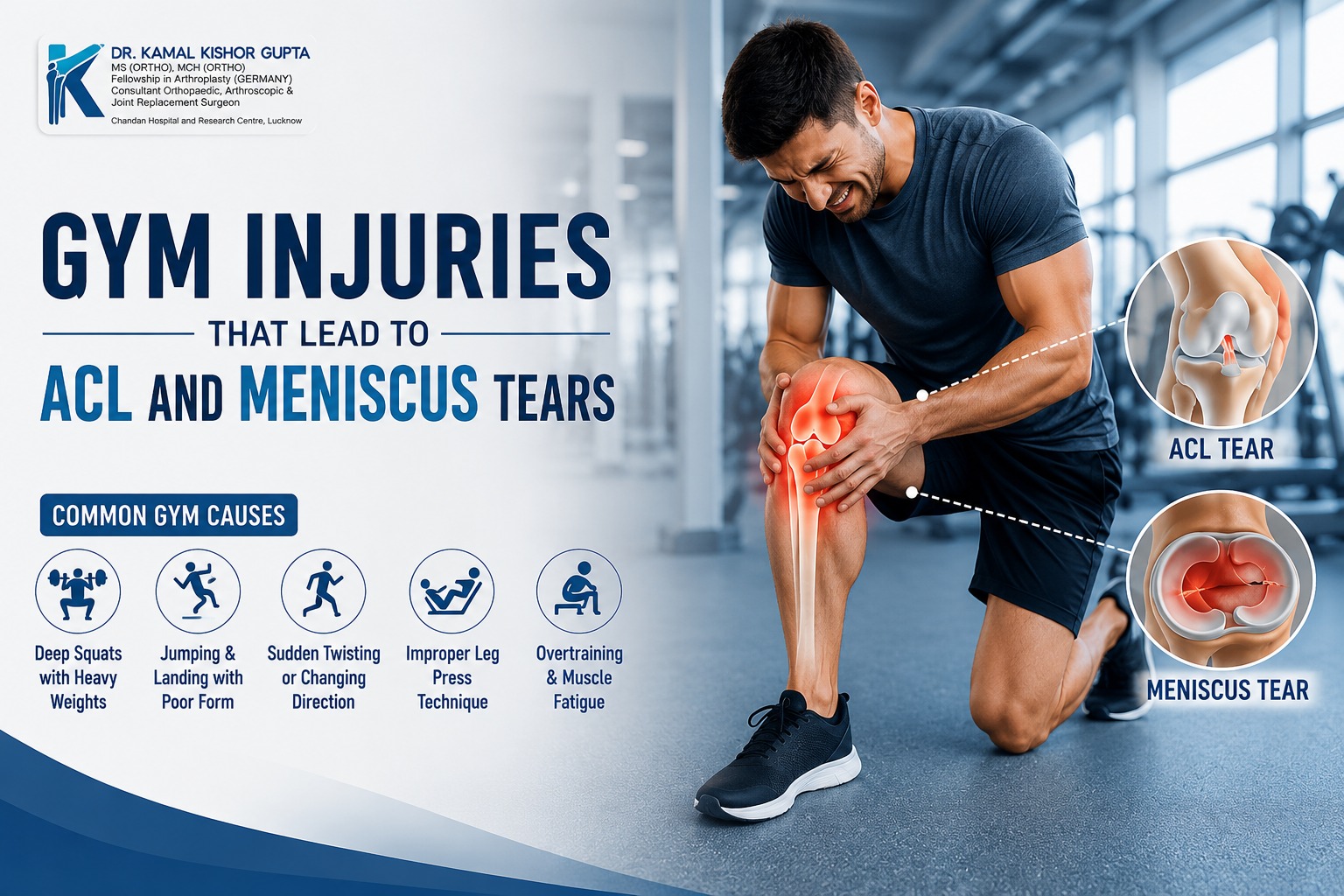
Quick Answer: The gym injuries that most often lead to ACL and meniscus tears are squats and lunges done with poor knee alignment, box jumps and plyometric landings, heavy leg press, sudden pivots during agility or sports drills, and treadmill sprinting on unstable footing. These movements twist the knee or place excessive stress on the joint, increasing the risk of tearing the ACL or meniscus. If you feel a pop, notice swelling, or experience your knee giving way, stop training immediately and consult a sports doctor in Lucknow. Early diagnosis and a structured rehabilitation program are essential for a full recovery.
Gyms are where many knee injuries quietly begin. A missed repetition, a heavy squat with the knees caving inward, or a rushed box jump can place excessive force on the knee joint. Two structures are most commonly affected: the ACL (Anterior Cruciate Ligament) and the meniscus, the C-shaped cartilage that cushions and stabilizes the knee.
This guide explains, in simple language, which gym injuries most commonly lead to ACL and meniscus tears, how to recognize the early warning signs, and what to do next. It is designed for gym-goers, athletes, and anyone who trains regularly and wants to keep their knees healthy and injury-free.
What Is the ACL and What Is the Meniscus?
Before understanding how gym injuries happen, it helps to know what these two important structures inside the knee actually do.
- ACL (Anterior Cruciate Ligament): A strong ligament inside the knee that prevents the shin bone from sliding too far forward and controls rotational movement. It is the primary stabiliser during activities such as jumping, landing, sprinting, and sudden changes in direction.
- Meniscus: Two C-shaped pieces of cartilage that sit between the thigh bone and shin bone. They act as shock absorbers, distribute body weight evenly across the knee, improve joint stability, and protect the cartilage surfaces from excessive wear.
Both the ACL and the meniscus are placed under stress whenever you squat, lunge, jump, or change direction while carrying weight. That is why improper exercise technique, excessive loads, or progressing too quickly in the gym can significantly increase the risk of injury.
Why Gym Workouts Are a Common Cause of ACL and Meniscus Tears
Unlike accidental injuries, most gym-related ACL and meniscus tears occur because the knee is exposed to forces it cannot safely control. In most cases, the injury results from a combination of the following factors:
- Excessive Load: Lifting heavier weights before the muscles around the knee are strong enough to provide adequate support.
- Poor Knee Alignment: Allowing the knees to collapse inward (known as valgus collapse) during squats, lunges, or landings, placing excessive rotational stress on the ACL.
- High-Speed Movements: Performing explosive actions such as jumping, sprinting, or sudden pivots without proper control, reducing the knee's ability to absorb force safely.
When excessive load, poor alignment, and high-speed movement occur together, even a single repetition can result in an ACL or meniscus tear. This is why many gym injuries happen during a movement that appears completely routine from the outside.
Top Gym Injuries and Exercises That Lead to ACL and Meniscus Tears
Certain gym exercises place more stress on the knee than others, especially when technique breaks down or excessive weight is used. Below are the most common movements associated with ACL and meniscus injuries.
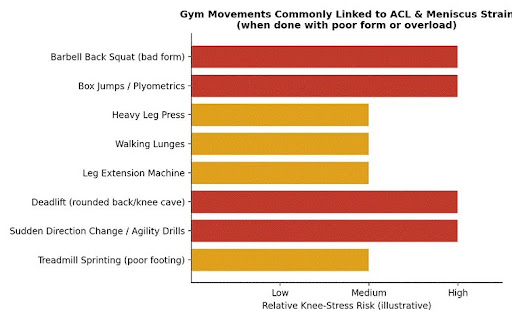
1. Barbell Squats With Poor Knee Alignment
When the knees cave inward at the bottom of a heavy squat, the ACL experiences excessive rotational stress. Poor squat mechanics combined with heavy loads are one of the most common causes of gym-related ACL injuries.
2. Box Jumps and Plyometric Training
Plyometric exercises improve explosive power, but landing awkwardly or with stiff knees can send a large impact through the joint. Landing with a twisted foot or poor balance significantly increases the risk of tearing the ACL or meniscus.
3. Heavy Leg Press
Using excessive weight or lowering the sled too far can place high compressive forces on the meniscus while also stressing the supporting ligaments of the knee. Poor knee tracking further increases the injury risk.
4. Walking Lunges and Split Squats
A loss of balance during weighted lunges or split squats can twist the front knee unexpectedly. This combination of rotation and load may strain both the ACL and the meniscus.
5. Leg Extension Machine (Heavy, Fast Repetitions)
The leg extension machine isolates the knee joint without significant support from the hips. Performing fast repetitions with heavy resistance increases shear forces across the knee, placing additional stress on the ACL and meniscus.
6. Deadlifts With Rounded Back or Knee Collapse
Although deadlifts primarily target the hips and posterior chain, allowing the knees to cave inward while lifting heavy transfers unwanted rotational forces to the ACL, increasing the chance of injury.
7. Sudden Direction Changes During Agility Drills
Functional training, shuttle runs, ladder drills, and cone drills often involve rapid pivots. A planted foot combined with a sudden body turn is one of the leading mechanisms for ACL tears in both athletes and recreational gym users.
8. Treadmill Sprinting or Uneven Footing
Sprinting at high speed with fatigued muscles or stepping awkwardly on or off a treadmill can cause the knee to twist unexpectedly, placing excessive stress on the meniscus and surrounding ligaments.
Visual Guide: Which Gym Movements Carry the Most Knee Risk
The chart below gives a simple, illustrative picture of how different gym movements compare in terms of knee stress, based on common biomechanical risk factors. It is meant as a general guide, not a clinical measurement.
Common Symptoms of ACL and Meniscus Tears
ACL tears and meniscus tears often occur together, but their symptoms can differ. Understanding these differences can help you describe your injury more accurately during a medical evaluation.
| Symptom | ACL Tear | Meniscus Tear |
|---|---|---|
| Onset | Sudden, often accompanied by a loud pop | Sudden or gradual, may worsen over several days |
| Swelling | Rapid swelling within 1–2 hours | Gradual swelling that develops over a day |
| Knee Feeling | Knee feels unstable or gives way | Knee catches, locks, or clicks during movement |
| Pain Location | Deep inside the knee joint | Pain along the joint line |
| Weight Bearing | Difficult immediately after the injury | Usually possible, but painful |
| Squatting / Twisting | Feels unstable | Sharp pain with possible locking of the knee |
First Aid: What to Do Right After a Gym Injury
If you hear a pop, experience sharp pain, or your knee suddenly gives way during a workout, stop exercising immediately. Do not attempt to finish your workout or "walk it off." During the first 24 to 48 hours, follow these first-aid measures:
- Rest: Stop all physical activity and avoid putting weight on the injured knee if it feels unstable.
- Ice: Apply an ice pack for 15–20 minutes every 2–3 hours to reduce pain and swelling.
- Compression: Use an elastic compression bandage to help control swelling.
- Elevation: Keep your leg raised above heart level whenever possible.
- Avoid Heat, Massage, and Alcohol: During the first 48 hours, these can increase swelling and delay recovery.
These steps provide immediate first aid but are not a substitute for medical treatment. An ACL or meniscus tear typically requires a thorough clinical examination and, in many cases, an MRI scan to determine the extent of the injury.
When Should You See a Doctor?
Not every episode of knee pain indicates a serious injury, but certain warning signs require prompt medical attention.
- You heard or felt a popping sensation at the time of injury.
- Swelling develops within a few hours.
- Your knee feels unstable or repeatedly gives way.
- You cannot fully straighten or bend your knee.
- Your knee locks or catches during movement.
- Pain and swelling do not improve after several days of rest.
If you experience any of these symptoms, seek an orthopaedic evaluation as soon as possible. Early diagnosis by a sports medicine specialist or orthopaedic surgeon can prevent further damage, improve treatment outcomes, and support a faster recovery.
How ACL and Meniscus Tears Are Diagnosed and Treated
Diagnosis of an ACL or meniscus injury usually begins with a detailed physical examination. Your doctor will assess knee stability, range of motion, swelling, and pain before recommending an MRI scan, which provides a clear picture of the extent and location of the damage.
Treatment depends on the severity of the injury, the patient's age, activity level, and fitness goals.
- Non-Surgical Treatment: Partial tears or injuries in less active individuals may be managed with knee bracing, physiotherapy, activity modification, and regenerative treatments such as PRP (Platelet-Rich Plasma) or growth factor therapy to support healing.
- Surgical Treatment: Complete ACL tears or meniscus tears that cause knee locking or instability often require arthroscopic ACL reconstruction or arthroscopic meniscus repair, particularly for athletes and physically active individuals.
Surgery is only one part of recovery. A structured rehabilitation programme plays the most important role in helping patients safely return to gym training and sports. Rehabilitation focuses on gradually restoring strength, stability, balance, flexibility, and movement control through carefully planned recovery phases.
How to Prevent ACL and Meniscus Injuries in the Gym
Most gym-related knee injuries can be prevented by following proper training techniques and avoiding unnecessary stress on the knee joint.
- Warm Up Properly: Spend 5–10 minutes performing dynamic warm-up exercises before lifting weights or doing explosive movements.
- Prioritise Technique: Master proper exercise form before increasing the weight. Keep your knees aligned over your toes instead of allowing them to collapse inward.
- Increase Weight Gradually: Avoid sudden jumps in training intensity or resistance.
- Strengthen the Hips and Glutes: Strong hip muscles improve knee alignment and reduce the risk of ligament injuries.
- Practise Safe Landing Mechanics: Land softly with slightly bent knees during jumps and plyometric exercises.
- Wear Proper Training Shoes: Supportive footwear improves stability and reduces unnecessary knee stress.
- Never Ignore Sharp Knee Pain: Stop the exercise immediately if pain develops and seek professional assessment if symptoms persist.
- Include Balance and Stability Exercises: Single-leg movements and proprioception training improve knee control during sudden direction changes.
Why an Experienced Sports Orthopaedic Specialist Matters
Dr. Kamal Kishor Gupta is a leading Orthopaedic doctor in Lucknow and an experienced sports medicine specialist. His advanced training includes a Fellowship in Arthroplasty and Arthroscopy from Singapore, Membership of the Royal College of Surgeons (Edinburgh), and a FIFA Diploma in Sports Medicine from Barcelona, qualifications held by only a limited number of specialists in India.
For patients with ACL or meniscus injuries, continuity of care is extremely important. When the same specialist performs the surgery and oversees the rehabilitation programme, treatment remains consistent from the operating theatre through every stage of recovery.
Rehabilitation progresses through carefully planned phases, beginning with pain control and protection, followed by strength and stability training, and finally sport-specific exercises. Return to gym training or athletic activity is guided by objective strength and functional assessments rather than a fixed timeline.
If you have injured your knee during a workout and are unsure whether it involves an ACL tear, a meniscus tear, or both, seeking an early evaluation from a sports orthopaedic specialist in Lucknow can lead to an accurate diagnosis, appropriate treatment, and a faster, safer recovery.
Frequently Asked Questions
Yes. A large number of ACL tears happen during normal training - a squat, a jump landing, or a pivot - with no fall or collision involved. The tear happens because of the angle and force on the knee, not an external impact.
Deep, loaded squats, heavy leg press, and twisting movements under load are the most common causes, especially when the knee rotates while bearing weight.
Only under medical guidance. Some partial tears can be managed with rehabilitation, but continuing to train without a diagnosis risks turning a partial tear into a complete one.
Non-surgical recovery can take a few weeks to a few months. After ACL reconstruction surgery, most people return to sport in about 6 to 9 months, depending on how well they progress through each rehab phase.
No. Small, stable tears in areas with good blood supply often heal with rest and physiotherapy. Larger tears, or ones that cause locking, usually need arthroscopic repair.
