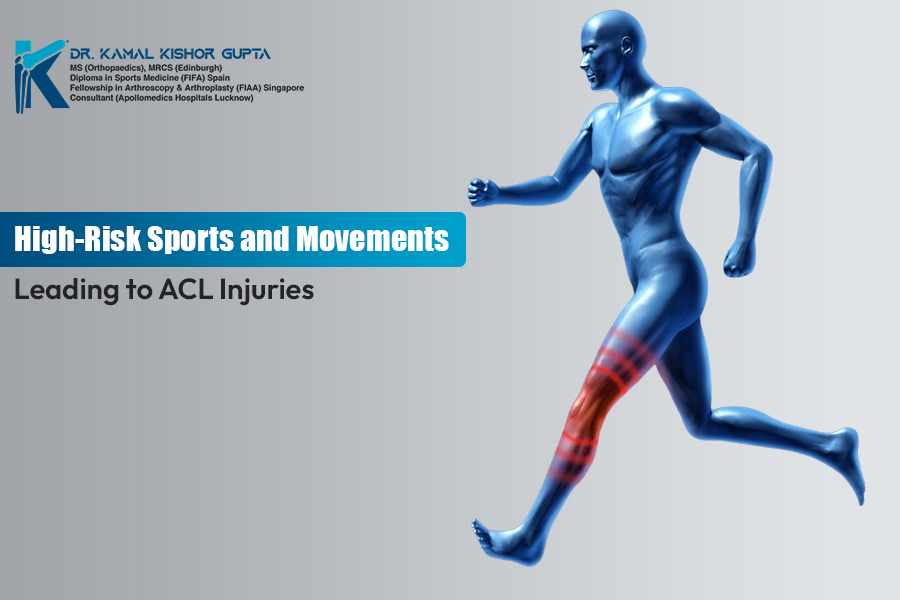
ACL: The anterior cruciate ligament is one of the important stabilizers of the knee joint; however, it is quite susceptible to injury. Several sports and movements impose intense stress on the ACL and increase the risk of a tear or rupture. High-risk sports, the mechanism of ACL injuries, and prevention strategies are all explained in this blog.
Understanding ACL Injuries
An ACL injury typically occurs when there is excessive strain on the ligament due to rapid movements or external forces. Common mechanisms of injury include:
- Pivoting: A sudden change in direction while the foot is firmly planted.
- Landing: Improper technique during a jump landing, often with the knee in a valgus (inward) position.
- Deceleration: Sudden stopping while running at high speed.
- Direct Impact: A blow to the knee, often seen in contact sports.
High-Risk Sports For ACL Injuries
1. Soccer
Soccer players frequently cut, pivot, and decelerate, all of which are frequent mechanisms for ACL injuries. Other injury-prone situations include duels in the air or contact with another player.
2. Basketball
Basketball is also common due to the propensity to jump and land frequently during a game, especially when grabbing rebounds or going for layups. Other risk factors include changing direction quickly and high-speed dribbling.
3. Football
American football is a very intense sport with high-impact collisions, sudden starts, stops, and changes in directions. Linemen and running backs are especially at risk during tackles and in evasive maneuvers.
4. Skiing
ACL injuries in skiers are typical through hyperextension of the knee and from twisting forces when one catches an edge. Falling on sloped terrain can also have its share of injuries.
5. Gymnastics
Gymnasts are also at great risk, primarily because of repetitive high-impact landing and twisting movements from routine performances.
6. Tennis
The lateral movement and abrupt stopping in tennis would put tremendous amounts of tension on the ACL, especially while playing on hard courts.
7. Volleyball
In volleyball, ACL injuries can occur during jumps or landing if the knee has not aligned appropriately.
High-Risk Movements Leading To ACL Injuries
1. Improper Jump Landing
A direct landing with a straight knee or an inward collapse of the knee exerts too much force on the ACL.
2. Sudden Directional Changes
Abrupt cuts, especially over uneven or slippery surfaces, can place excessive stretch on the ligament.
3. Over-Rotation
Twisting movements that involve planting the foot usually cause the ligament to tear.
4. Hyperextension
Forcing the knee past its normal movement creates a stretching or tearing force on the ACL.
5. Direct Knee Impact
Contact injuries, such as a blow to the side of the knee, can cause damage to the ACL along with other structures, such as the MCL and meniscus.
Preventing ACL Injuries In High-Risk Sports
1. Strength Training
Strong quadriceps, hamstrings, and gluteal muscles can help stabilize the knee and reduce tension on the ACL.
2. Neuromuscular Training
Training programs that emphasize balance, coordination, and proprioception can improve knee control during dynamic movements.
3. Proper Landing Techniques
Athletes should be trained to land with bent knees and aligned hips in order to distribute forces appropriately.
4. Sports-Specific Drills
Drills that mimic game situations can prepare athletes for the demands of their sport and reduce injury risks.
5. Use Of Protective Gear
Braces or supportive footwear can provide additional stability in high-risk sports.
6. Regular Warm-Up
Dynamic warm-ups improve muscle elasticity and joint mobility, making injuries less likely.
Movements involved in sports like soccer, basketball, and skiing create severe stress on the ACL and, therefore, a greater likelihood of injury. Understanding such risks and adopting preventive measures such as neuromuscular training and proper techniques can greatly reduce the chances of an ACL injury. Athletes, coaches, and trainers must prioritize injury prevention to ensure both performance and longevity in their respective sports.
For more information on preventing ACL injuries and personalized treatment options, explore our comprehensive guide on knee injuries or visit Dr Kamal Kishor Gupta’s clinic in Lucknow.
